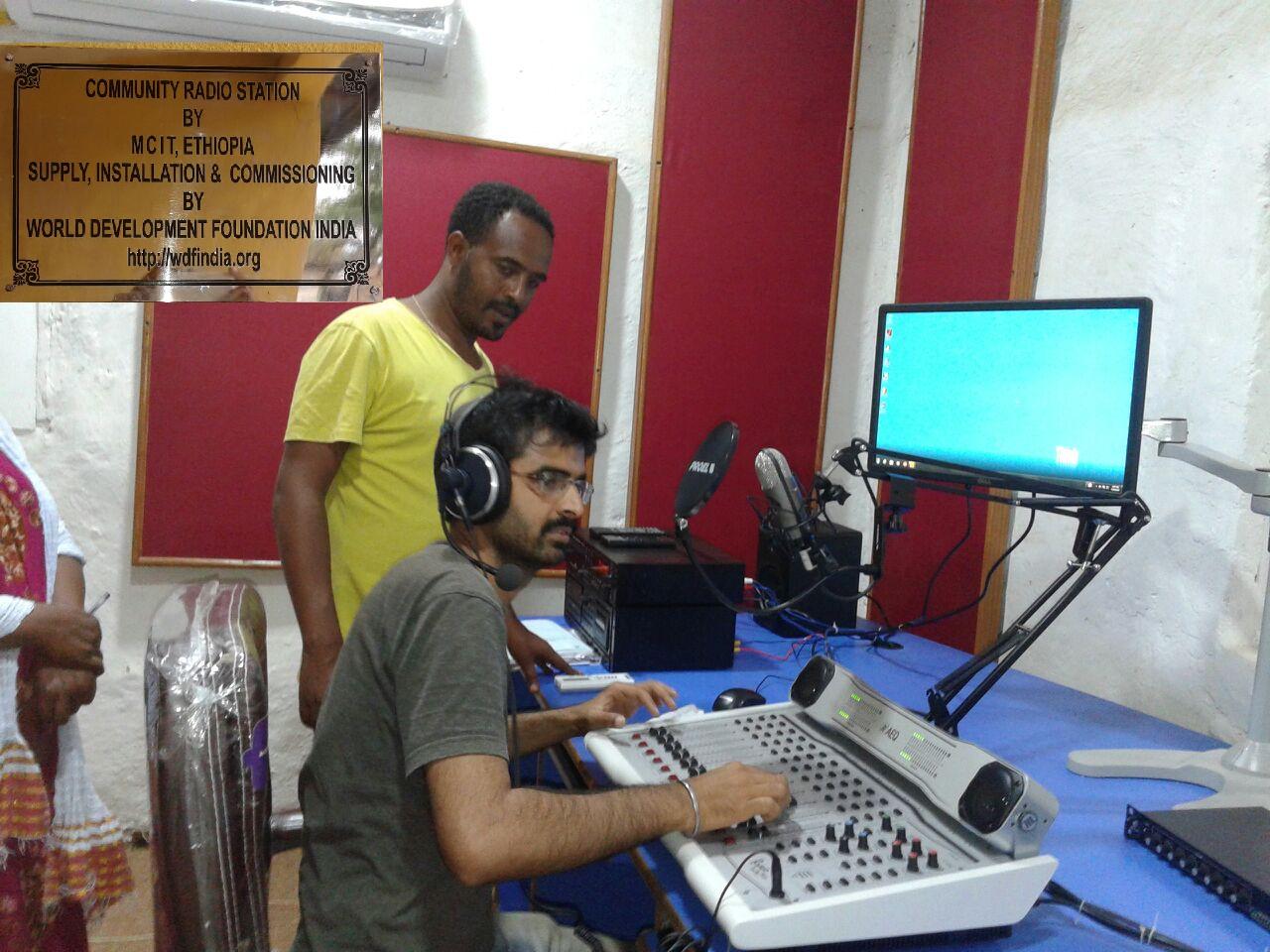
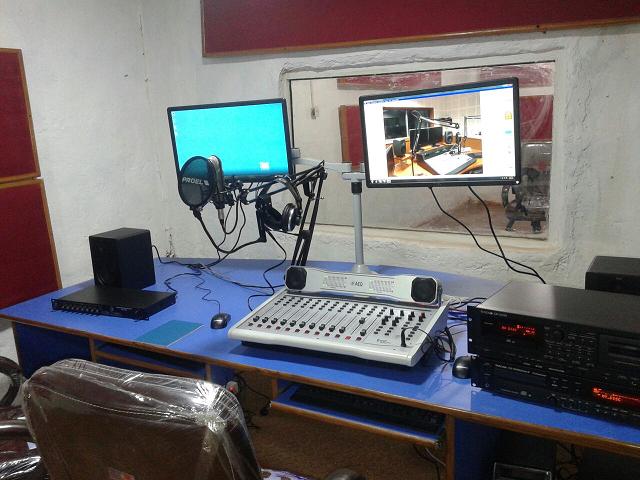
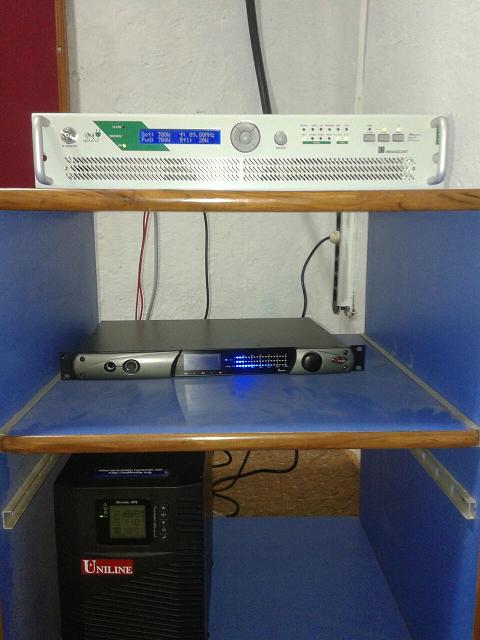
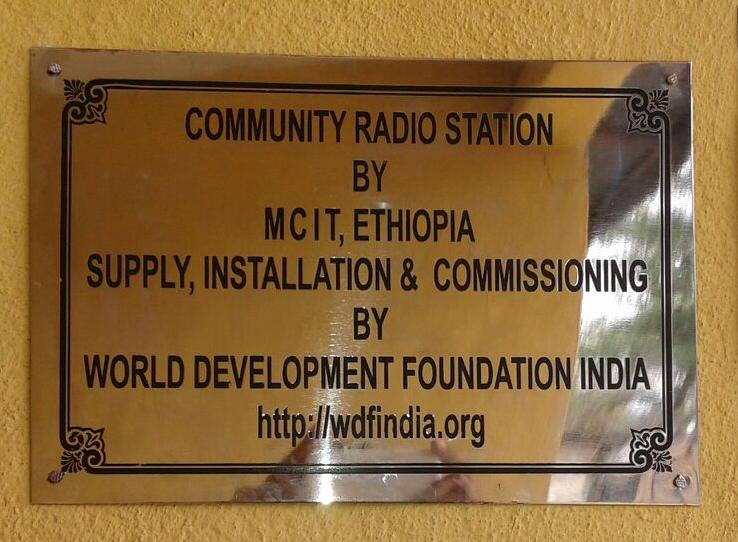
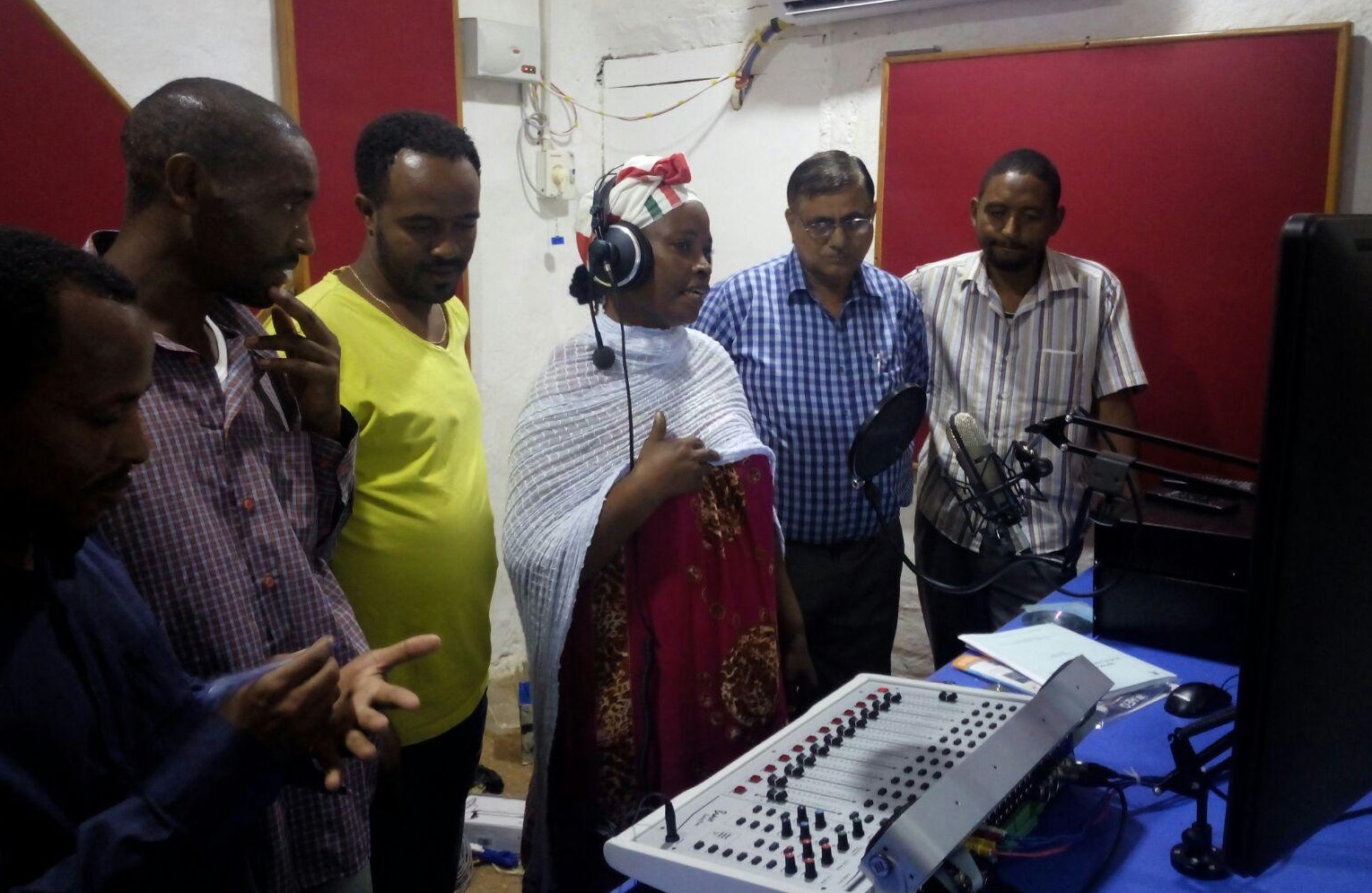
Community Radio is a low-cost, participatory broadcasting medium owned and managed by the community it serves. Unlike commercial or public radio, CRS content is produced by and for local communities — in their language, on their terms, and addressing their specific needs. The Government of India first permitted recognised universities, KVKs, colleges, and NGOs to set up community radio stations under the CRS guidelines shaped by Dr. H. O. Srivastava, who drafted India's first CRS policy and chose the technology framework.
WDF's President, Dr. H. O. Srivastava (former Additional Director General of All India Radio), was instrumental in enacting the Government of India Act for Community Radio establishment in 2002 and has since pioneered CRS deployments across India, Nepal, and Ethiopia.
- Participatory communication — content produced with and for the community
- Hyper-local reach — FM transmission up to 10–20 km radius in local dialects
- Cost-effective — low CAPEX/OPEX compared to any other mass medium
- Two-way interactivity — phone-ins, expert panels, farmer-to-farmer exchange
- SDG alignment — directly contributes to SDG 1 (No Poverty), SDG 2 (Zero Hunger), SDG 4 (Quality Education), SDG 5 (Gender Equality)